Medical Mystery12 picksUpdated June 2025

Medical Mystery Podcasts That Actually Explain the Science

Cold cases, diagnostic puzzles, and the strange edge cases of medicine. The shows that make medical uncertainty gripping without sacrificing accuracy.

Medical mystery podcasts sit at the intersection of true crime, science journalism, and clinical narrative. The best ones take a case that resisted explanation — a patient whose symptoms baffled specialists, a historical death that remains contested, an outbreak that took years to trace — and work through it with enough scientific rigor that listeners understand why it was hard.

The worst medical mystery podcasts treat the uncertainty as atmosphere and the science as decoration. The shows here do the opposite: they use the mystery as a vehicle for genuine medical education, and the resolution, when it comes, makes sense because the listener has been given the tools to understand it.

For creators, medical mystery podcasts demonstrate the value of structural tension as a teaching mechanism. A diagnostic puzzle keeps a listener engaged through pathophysiology they would never sit through in a lecture. The mystery format is not a concession to entertainment — it is a genuine pedagogical tool.

How we chose these shows

  • Scientific accuracy that serves the mystery rather than simplifying it for accessibility
  • Cases complex enough to resist immediate explanation, with the difficulty itself being part of the story
  • Genuine engagement with medical uncertainty rather than false retrospective clarity
  • Human stakes that make the clinical questions emotionally resonant
Diagnosis
#1
Diagnostic Medicine

Diagnosis

Hosted by Dr. Lisa Sanders

Dr. Lisa Sanders's Diagnosis podcast, an extension of her New York Times column, follows real patients with undiagnosed conditions through the diagnostic process, making the clinical reasoning behind each case transparent and teachable.

Why listen as a creator

Diagnosis demonstrates that the most compelling medical mystery format is one where the detective work is visible. Sanders walks through the differential diagnoses, the tests ordered and what they ruled out, and the moments where experienced physicians were genuinely uncertain — which is more educationally valuable than a narrative that makes the answer seem inevitable in retrospect.
Bedside Rounds
#2
Medical History

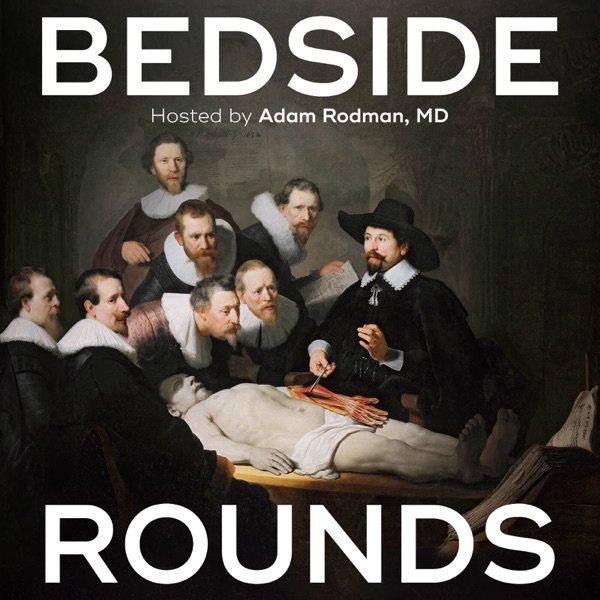
Bedside Rounds

Hosted by Dr. Adam Rodman

Dr. Adam Rodman's Bedside Rounds explores the history of medicine through cases that reveal how medical understanding has changed over time, with historical mysteries that illuminate how diagnostic frameworks shape what physicians can see.

Why listen as a creator

Bedside Rounds demonstrates that historical medical mysteries are the most pedagogically rich type because they reveal how thoroughly diagnostic context shapes clinical perception. Cases that baffled nineteenth-century physicians often seem obvious today not because physicians were less intelligent but because the conceptual tools didn't exist yet.

Medical Mysteries
#3
Medical Investigation

Medical Mysteries

Hosted by Various

Medical Mysteries covers documented cases where patients presented with symptoms that resisted conventional diagnostic categories, tracing the investigative process that eventually led to diagnosis.

Why listen as a creator

Medical Mysteries demonstrates that the most useful episodes are ones where the diagnostic process is reconstructed accurately rather than edited to seem linear. The false starts, the consultations that produced wrong answers, and the moment where a clinician noticed something others missed are all part of what makes medical mystery content genuinely educational.

Freakonomics MD
#4
Medical Economics

Freakonomics MD

Hosted by Dr. Bapu Jena

Dr. Bapu Jena's Freakonomics MD applies economic thinking to medical questions, revealing the counterintuitive ways that incentives, chance, and systemic factors shape medical outcomes.

Why listen as a creator

Freakonomics MD demonstrates that medical mystery can operate at the population level rather than the individual case level. The mysteries here are questions like why outcomes differ between seemingly identical patient populations, which requires economic and statistical reasoning rather than clinical diagnosis and produces equally useful insights.

American Innovations: Medical Mysteries
#5
Medical History and Innovation

American Innovations: Medical Mysteries

Hosted by Steven Johnson

Steven Johnson's American Innovations examines the stories behind major medical discoveries, including the investigative processes that solved long-standing medical mysteries.

Why listen as a creator

American Innovations demonstrates that the history of medical discovery is itself a genre of medical mystery: the cases where generations of physicians accepted a wrong explanation, and the specific moment when someone looked at familiar evidence differently. Those inflection points are the most interesting stories in medicine.

The Poison Lab
#6
Toxicology

The Poison Lab

Hosted by Various

Toxicology-focused medical mystery podcasts cover cases where the cause of illness or death required forensic chemical analysis to identify, with episodes that make the science of poisoning and its detection genuinely comprehensible.

Why listen as a creator

Toxicology-focused medical mystery podcasting demonstrates that forensic chemistry produces some of the most compelling mystery narratives in medicine because the investigative tools are so counterintuitive. The ways that toxicologists identify unknown substances, and the historical cases where those tools didn't yet exist, are both compelling and educational.

Sawbones: A Marital Tour of Misguided Medicine
#7
Medical History Comedy

Sawbones: A Marital Tour of Misguided Medicine

Hosted by Dr. Sydnee McElroy and Justin McElroy

Dr. Sydnee McElroy and her husband Justin's Sawbones explores the history of medical treatments that were once accepted and later found to be wrong or harmful, making the mystery of how physicians could have believed such things the central question.

Why listen as a creator

Sawbones demonstrates that the most accessible medical mystery format is one that makes historical medical error comprehensible rather than simply absurd. Understanding why bloodletting made theoretical sense to physicians who used it, or why thalidomide passed safety review, is more useful than treating past medical error as obvious foolishness.

This Podcast Will Kill You
#8
Infectious Disease

This Podcast Will Kill You

Hosted by Erin Welsh and Erin Allmann Updyke

Two disease ecologists' podcast on infectious disease history covers the medical mysteries that preceded understanding of germ theory, the investigative processes that traced epidemic origins, and the cases where the source of an outbreak remained unresolved for years.

Why listen as a creator

This Podcast Will Kill You demonstrates that epidemic investigation is a form of medical mystery with a distinct investigative methodology. The process of tracing an infectious disease outbreak, from patient zero to transmission chain to source, requires epidemiological reasoning that the show makes genuinely comprehensible.

Chasing Life
#9
Health and Medicine

Chasing Life

Hosted by Dr. Sanjay Gupta

CNN Chief Medical Correspondent Dr. Sanjay Gupta's podcast covers medical mysteries, health controversies, and the cases where medical science has produced surprising or counterintuitive findings.

Why listen as a creator

Chasing Life demonstrates that medical mystery content is most useful when it addresses questions listeners actually have about their own health. Gupta's clinical background and journalism experience produce episodes that take medical uncertainty seriously without either catastrophizing or false reassurance.

Anatomy of Murder
#10
Forensic Pathology

Anatomy of Murder

Hosted by Anna-Sigga Nicolazzi and Scott Weinberger

Former prosecutor Anna-Sigga Nicolazzi and investigative journalist Scott Weinberger cover murder cases where forensic medical evidence was central to the investigation, with episodes that explain how forensic pathology actually works.

Why listen as a creator

Anatomy of Murder demonstrates that the intersection of forensic medicine and criminal investigation produces some of the most compelling medical mystery content available. Cases where the cause of death itself was the central dispute, and where forensic pathologists gave contradictory testimony, reveal how much expert judgment is involved in what seems like objective science.

Radiolab
#11
Science and Medicine

Radiolab

Hosted by Lulu Miller and Latif Nasser

Radiolab's science journalism has produced some of the most celebrated medical mystery episodes in podcasting, with episodes covering cases that sit at the boundary of medicine, ethics, and human biology.

Why listen as a creator

Radiolab demonstrates that medical mystery podcasting is most powerful when it moves from the clinical to the philosophical. The best Radiolab medical episodes don't stop at explaining what happened — they ask what the case reveals about the nature of illness, identity, consciousness, or what it means to be treated by medicine.

The Moth: Medicine Stories
#12
First-Person Medical Narrative

The Moth: Medicine Stories

Hosted by Various

First-person medical narrative podcasting, exemplified by The Moth's medicine-focused episodes, covers patients and physicians telling their own stories of diagnosis, treatment, and the moments of uncertainty that medical mystery produces.

Why listen as a creator

First-person medical narrative demonstrates that the patient perspective on diagnostic mystery is fundamentally different from the clinical perspective, and both are necessary for a complete understanding of what medical uncertainty means. Hearing a patient describe the period before diagnosis, when symptoms were present but unexplained, is a form of medical education that clinical case studies don't provide.

Ready to start?

Record your first podcast with Hilite

Free tools, AI audio, one workflow.

Start free