Greatest Episodes12 picksUpdated June 2025

The Podcast Episodes People Still Talk About

The single episodes that defined what podcasting could be. Not best shows — best episodes. The ones worth finding even if you've never listened to the full feed.

A great podcast episode is different from a great podcast show. The best shows are consistent. The best episodes are singular — moments where everything aligned: the right guest said something unexpected, the host asked the question no one else would have, or the story found the perfect form. These are the episodes that circulate beyond their original audience.

The episodes here are the ones that podcasting culture returns to. Some are famous for what the guest revealed. Some for the host's technique. Some for the way a complex story was told. All of them are worth finding even if you've never followed the full show.

For creators, these episodes are worth studying technically, not just experiencing. Each one solved a specific problem in a specific way. The way Fresh Air handles the silence after a revealing answer. The way Serial managed uncertainty across multiple episodes. These are craft decisions worth understanding.

How we chose these shows

  • A single episode that can be understood without knowledge of the full show's history
  • A moment of genuine revelation — something said or revealed that couldn't have been predicted
  • Craft decisions that other podcasters have learned from and cited
  • Cultural impact beyond the show's existing audience
Serial: Episode 1 — The Alibi
#1
Investigative True Crime

Serial: Episode 1 — The Alibi

Hosted by Sarah Koenig

The first episode of Serial introduced Adnan Syed's case and established the format that launched the podcast boom, with Sarah Koenig's narration making her own uncertainty the central dramatic device in a way that had never been done before.

Why listen as a creator

Serial Episode 1 demonstrates the founding craft decision of the first-person investigative podcast: making the journalist's uncertainty visible rather than performing false confidence. Koenig's willingness to tell the listener she doesn't know what happened is both a technique and an ethics, and it changed what investigative journalism in podcast form could sound like.

This American Life: The Giant Pool of Money
#2
Financial Journalism

This American Life: The Giant Pool of Money

Hosted by Ira Glass, Alex Blumberg, and Adam Davidson

This American Life's 2008 episode explaining the mortgage crisis through individual stories is widely cited as the best explanation of the financial crisis ever produced, using TAL's narrative format to make complex financial mechanics genuinely comprehensible.

Why listen as a creator

The Giant Pool of Money demonstrates that complex financial systems can be explained through individual human stakes without sacrificing accuracy. The episode's structure, moving from a specific mortgage broker to the global financial system that his loans fed, is a masterclass in explanatory journalism that uses story as the vehicle for understanding rather than as a decoration on top of it.

Hardcore History: Ghosts of the Ostfront
#3
History

Hardcore History: Ghosts of the Ostfront

Hosted by Dan Carlin

Dan Carlin's multi-part series on the Eastern Front of World War II is the most-downloaded history podcast in the medium's history, demonstrating that extreme long-form history content has an audience that shorter academic formats have never been able to serve.

Why listen as a creator

Ghosts of the Ostfront demonstrates what happens when a historian with genuine storytelling instincts is given unlimited time to work with primary sources. Carlin's willingness to sit with the scale of the Eastern Front's casualties without reducing them to statistics is the specific craft decision that makes the series unforgettable rather than merely informative.

Fresh Air: Terry Gross interviews Gene Simmons
#4
Interview

Fresh Air: Terry Gross interviews Gene Simmons

Hosted by Terry Gross

Terry Gross's 2002 interview with KISS bassist Gene Simmons became famous for its confrontation between Gross's journalistic standards and Simmons's deliberate provocation, demonstrating the art of the adversarial interview and the ethics of how hosts respond to bad-faith guests.

Why listen as a creator

The Gene Simmons episode demonstrates that the most memorable interview episodes are not the most cooperative ones. Gross's decision to end the interview rather than continue engaging with Simmons's deliberate provocations is itself a craft and ethics decision worth studying, as is the way she handled his attempts to derail her questions throughout.

Radiolab: Blame
#5
Science and Philosophy

Radiolab: Blame

Hosted by Jad Abumrad and Robert Krulwich

Radiolab's Blame episode examines the neuroscience of impulse control and criminal responsibility through cases that make the philosophical question of free will a genuinely clinical question with legal consequences.

Why listen as a creator

Radiolab's Blame demonstrates the podcast format's unique ability to make philosophy visceral through case studies. The episode's movement from neuroscience to ethics to law uses sound design and personal narrative in ways that written philosophy cannot, and the questions it raises about responsibility and agency are not resolved by the end — which is the honest answer.

S-Town
#6
Narrative Non-Fiction

S-Town

Hosted by Brian Reed

S-Town's seven-chapter story of John B. McLemore in rural Alabama is widely regarded as the most formally accomplished piece of audio storytelling ever produced, arriving fully formed as a binge-able series that demonstrated what podcast narrative could do.

Why listen as a creator

S-Town demonstrates that podcast narrative can function as literature. Brian Reed's structural decision to abandon the expected story he was reporting in favor of the unexpected one he found is the central craft move of the entire series, and understanding why he made that choice — what he recognized in John B. McLemore that made the original premise irrelevant — is a master class in long-form narrative journalism.

99% Invisible: The Pruitt-Igoe Myth
#7
Architecture and Design

99% Invisible: The Pruitt-Igoe Myth

Hosted by Roman Mars

99% Invisible's episode on the Pruitt-Igoe housing project demolition challenges the received narrative that modernist architecture caused the project's failure, demonstrating how design criticism can correct popular historical misunderstanding.

Why listen as a creator

The Pruitt-Igoe episode demonstrates that design criticism podcasting is most valuable when it corrects confident popular misconceptions. The story that Pruitt-Igoe failed because of its architectural design was so widely repeated that it had become architectural common sense, and the episode's methodical dismantling of that explanation is a model for how audio journalism can handle historical revisionism.

Planet Money: The T-Shirt
#8
Economics

Planet Money: The T-Shirt

Hosted by Various

Planet Money's multi-part episode tracing the global supply chain of a single T-shirt is a landmark in explanatory economics journalism, making the complexity of global trade visible through a single object's journey.

Why listen as a creator

Planet Money's T-Shirt episode demonstrates that object-based economics journalism is more effective than abstract explanation. Following a single garment from cotton field to retail store through six countries makes global supply chain complexity tangible in a way that statistics about trade volumes cannot, and the human stories along the supply chain make the economic stakes real.

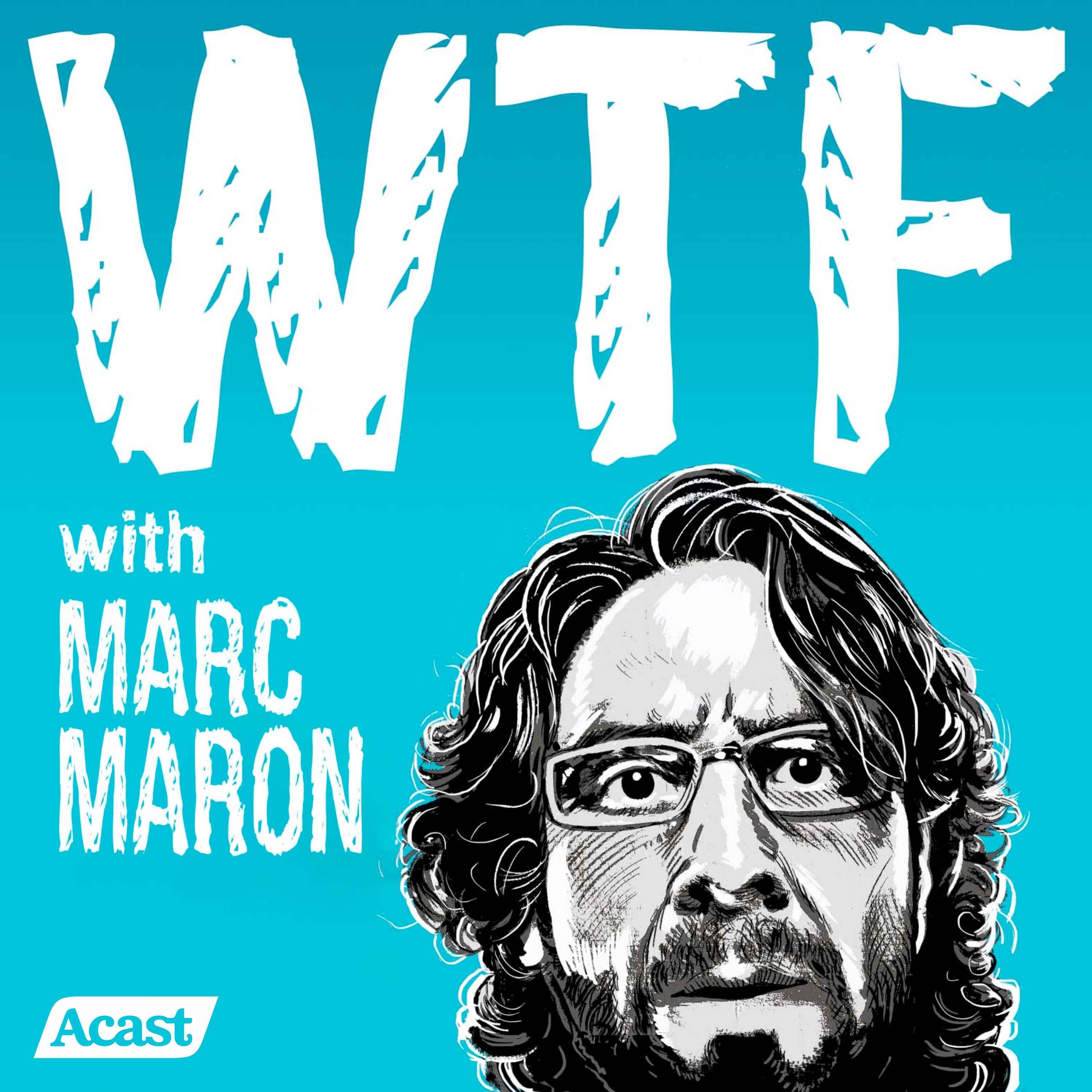
WTF with Marc Maron: Robin Williams Interview
#9
Comedy Interview

WTF with Marc Maron: Robin Williams Interview

Hosted by Marc Maron

Marc Maron's 2010 interview with Robin Williams is widely cited as one of the most revealing celebrity interviews in podcast history, with Williams speaking about depression, sobriety, and his relationship with comedy in ways that gained additional weight after his death.

Why listen as a creator

The Robin Williams episode demonstrates what the intimate podcast interview format can extract from subjects who perform a public persona in every other format. Williams's openness with Maron about depression and the relationship between pain and comedy is available nowhere else in his public record, and the episode demonstrates why long-form intimate format reaches things that television doesn't.

Conan O'Brien Needs a Friend: Bill Burr
#10
Comedy

Conan O'Brien Needs a Friend: Bill Burr

Hosted by Conan O'Brien

Conan O'Brien and Bill Burr's conversations demonstrate the chemistry-dependent nature of comedy podcast episodes that listeners cite as the best examples of the format, with the two comedians' contrasting styles producing a friction that generates genuine surprise.

Why listen as a creator

The Conan and Burr episodes demonstrate that comedy podcast chemistry is not about agreement but about productive friction. The moments where Burr's directness collides with Conan's wit produce comedy that neither host generates alone, and the episodes are technically useful for creators who want to understand how host dynamics shape what conversation can become.

Ologies: The Kelly Weinersmith Interview on Parasites
#11
Science

Ologies: The Kelly Weinersmith Interview on Parasites

Hosted by Alie Ward

Alie Ward's parasite episodes with scientist Kelly Weinersmith are regularly cited as the best examples of science communication podcasting, with a host-guest dynamic that makes complex parasitology genuinely funny and memorable.

Why listen as a creator

The Ologies parasite episodes demonstrate that science communication podcasting is most effective when the host's genuine ignorance creates the conditions for explanation rather than performing expertise. Ward's real confusion about parasitology is what makes Weinersmith's explanations land — the listener is discovering alongside the host rather than receiving a lecture.

The Joe Rogan Experience: Edward Snowden (Episode #1368)
#12
Long-Form Interview

The Joe Rogan Experience: Edward Snowden (Episode #1368)

Hosted by Joe Rogan

Joe Rogan's three-hour interview with Edward Snowden is one of the most-listened-to episodes in podcast history, with Snowden's explanations of NSA surveillance programs reaching a mainstream audience that national security journalism had never been able to reach.

Why listen as a creator

The Snowden episode demonstrates that podcast format reaches audiences that traditional journalism cannot. Snowden's explanations of surveillance programs in Rogan's format reached tens of millions of listeners who would never have sought out the same information in print, demonstrating that long-form podcast conversation is a genuinely distinct distribution channel rather than a substitute for other media.

Ready to start?

Record your first podcast with Hilite

Free tools, AI audio, one workflow.

Start free