Edit a bedtime story recording
Voice Memos on an iPhone will trim the start and the end and delete a chunk from the middle, which covers about half of what a bedtime recording needs. Audacity does the rest and costs nothing, but it's a full desktop program with an evening's learning curve you probably weren't planning on. The actual jobs are small and specific: take out the page turns and the mouth noise, get the volume even so nobody is reaching for the dial at 8pm, keep the warmth of the read rather than processing it flat, and fade the last few seconds instead of stopping dead. Hilite does those four in a browser tab, on whatever device the recording is already on, and hands you back an mp3 that plays on any speaker.
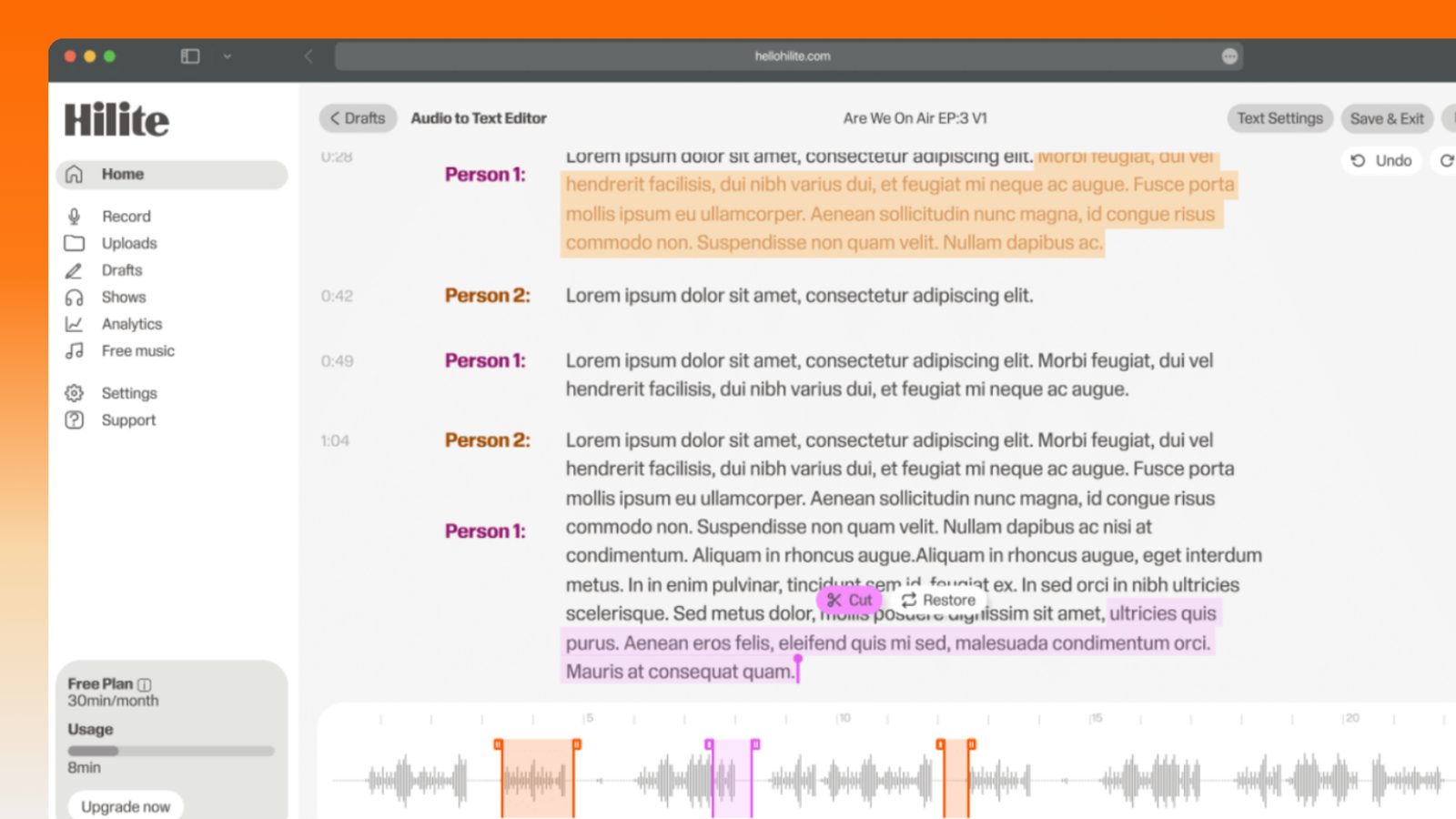
Edit a bedtime story in four steps
- 1
Listen once at bedtime volume
Play it back quietly, the way it will actually be heard. Everything worth fixing shows up at low volume: the moment that jumps out, the page turn, the sentence that disappears entirely.
- 2
Cut the noises, keep the pauses
Take out page turns, thumps, the dog, the worst of the mouth clicks and any restart. Leave the silences alone — the gaps between sentences are doing the settling, and a story edited tight sounds hurried.
- 3
Level the whole file
Run levelling across the entire recording so the softer last page sits at the same volume as the louder first page. Then pull the background noise down a little — not all the way, or the room goes unnaturally dead behind the voice.
- 4
Fade out and export
Fade the last two or three seconds to silence, check the very start doesn't open with a click or a breath, and export mp3. Name it something a tired adult can find in the dark.
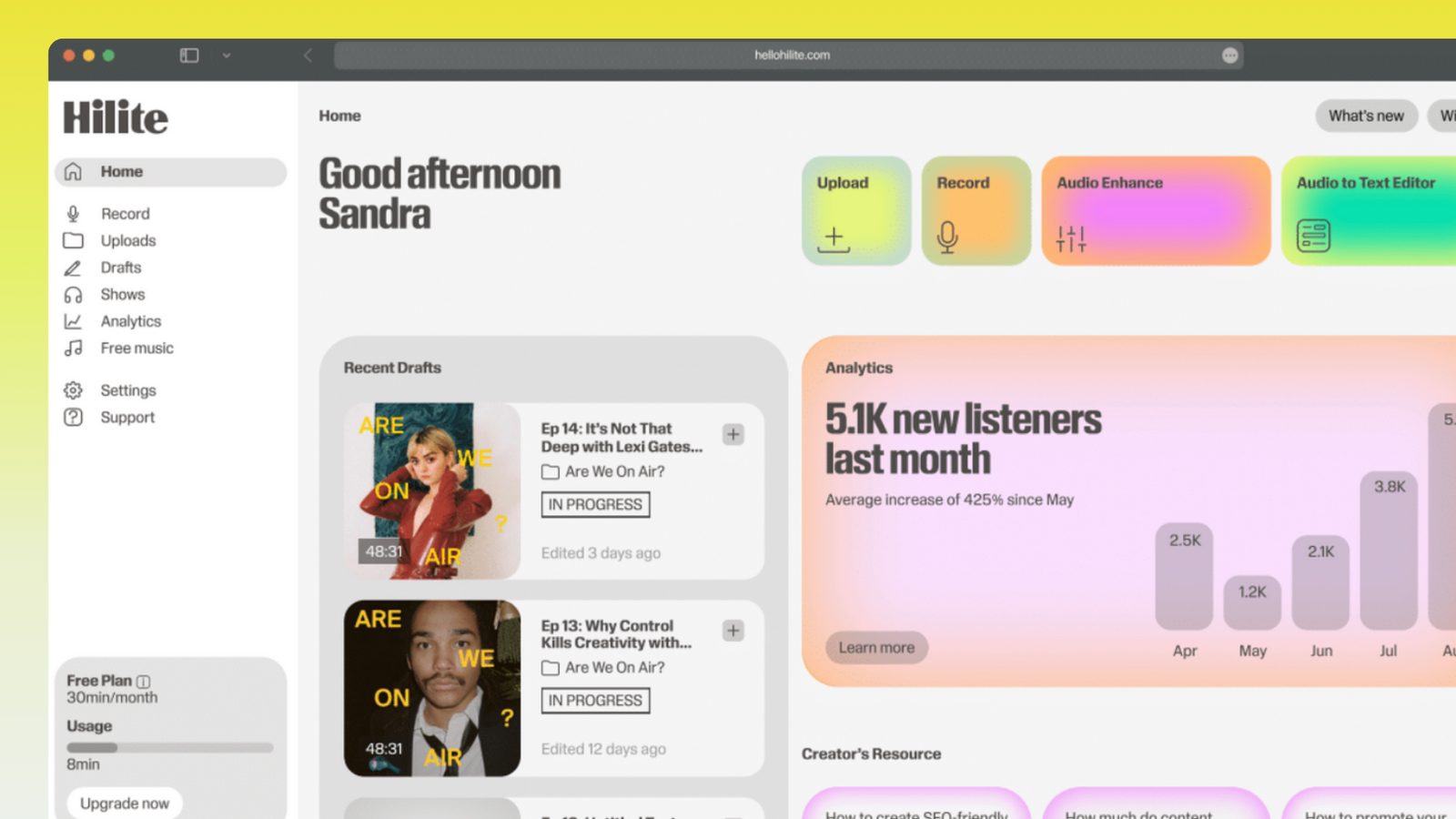
Merge audio inside the Hilite editor
Your uploaded files open directly in a focused editor view. Arrange your clips, preview the timeline, adjust transitions, and export when the track sounds perfectly right.
- Drag to reorder clips
- Trim starts, ends, and gaps
- Preview the full track before export
Input formats
Output formats
Built for every kind of audio
Whatever you are making, this tool helps you get to a cleaner, more useful result, then hand off to Hilite to enhance and polish.
- Even beats polishedNobody should have to ride the volume knob at 8pm. One sudden loud moment undoes twenty minutes of settling, so getting the whole file to one steady level matters more than every other edit put together.
- Keep the warmth inIt's tempting to process a voice until it's clean and flat. Don't. The recording works because it sounds like a person in the room — leave the softness, the breath and the slight unevenness of a real read alone.
- Fade, never cutA hard stop is a small jolt in a quiet room, and quiet rooms are where this file lives. Two or three seconds of fade lets the story dissolve instead of ending, and a child half asleep never notices it finished.
- Short enough to repeatTen to fifteen minutes plays better than forty. It fits one settling, it loops without an awkward gap, and it's small enough to send in a message or drop onto a phone before a trip.
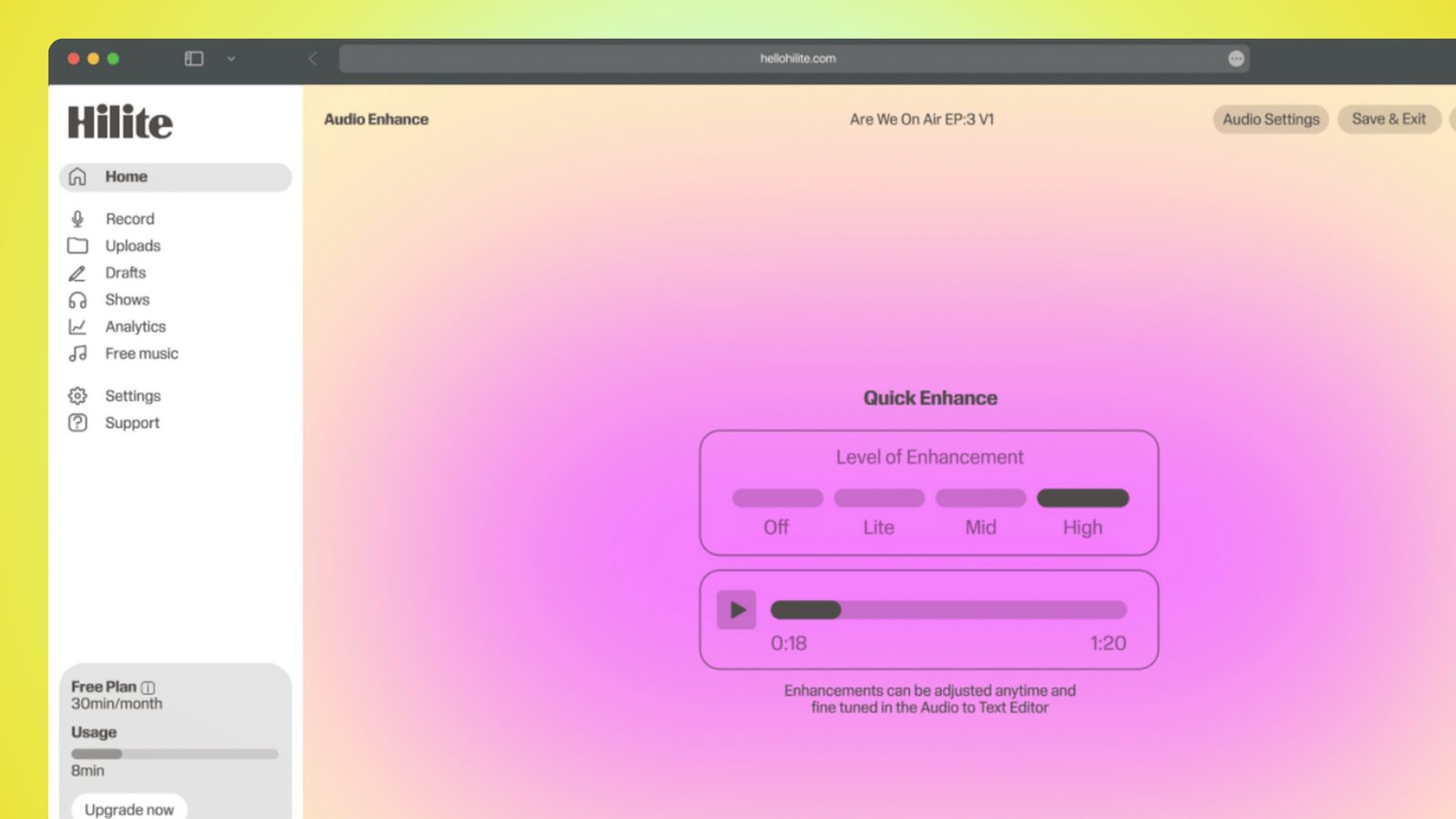
Made for podcasters and their teams
Trim the dead air off the top and tail, and every recording is ready to edit, enhance, and publish.



FAQ
Common questions
If you do not see your question here, the support team replies within one business day.
- Use levelling (sometimes called normalising or loudness matching) across the whole file rather than fixing loud bits one at a time by hand. It lifts the quiet passages and holds the loud ones down so the recording sits at one steady level throughout. This matters more for a bedtime story than for almost anything else, because the volume is set once at the start and then nobody touches it — anything that leaps out gets heard at full whack by someone who was nearly asleep.
- Page turns are easy to cut because they nearly always land in the gap between sentences, so you can remove the noise without cutting a word. Find them by eye first — they show up on the waveform as a short spike in an otherwise flat gap — then listen to each one to make sure a word isn't tucked underneath. Cut the spike and leave the silence around it, so the pause stays the same length it was. If you cut the whole gap out, the read starts to feel rushed even though nothing is missing.
- Some of it, not all of it. Pulling down the hiss from a fridge or a laptop fan makes the file easier to listen to at low volume. Taking it all the way to silence makes the voice sound like it's floating in a vacuum, and heavy noise reduction adds a watery, fluttering quality around soft consonants that's very audible in a quiet bedroom. Reduce it until the hiss stops drawing attention, then stop — a slight sense of a real room behind the reader is part of why the recording is comforting.
- Aim for ten to fifteen minutes. That's about one picture book read slowly, or a short chapter, and it matches roughly how long a settle takes. If the raw recording is longer, it's usually better to split it into separate stories than to trim it down, because two ten-minute files can be played in either order, repeated, or skipped. Short files are also small enough to send over a message without anything compressing them.
- You can, and most people who try it end up taking it back out. Music under speech has to be much quieter than feels right while you're mixing — quiet enough that you stop noticing it — or it fights the voice at low volume. If you do add it, use something without a clear melody or a beat, keep it well under the voice, and fade it out with the last line rather than letting it run on. Also check the licence: most music you can find is not free to publish, though a private family recording is a different matter from something you're putting online.
- A bit. Voice Memos lets you trim the ends, delete a selected section, and replace a section by recording over it, which handles a fluffed sentence perfectly well. What it can't do is even out the volume, reduce the background noise, fade the ending, or cut a page turn cleanly without leaving a gap in the wrong place. You can start in Voice Memos and finish elsewhere — share the file out as m4a and open it in an editor rather than re-recording the story.
- Most phone and speaker apps have a repeat-one setting, and that does the job as long as the file is built for it. Two things make a loop work: a proper fade at the end and no loud opening. If the recording starts with a bright "Right then!" and ends abruptly, every loop is a small alarm clock. Fade the tail, start the first line gently, and keep the file short enough that a repeat isn't a forty-minute wait.
- Mp3, unless you have a specific reason not to. It plays on every phone, tablet, speaker and car stereo without an app, and a spoken-word recording loses nothing audible at normal mp3 quality. Phone recorders often save as m4a, which is fine on Apple devices and occasionally awkward everywhere else. Keep a copy of the original unedited recording too, especially if it's a grandparent or a parent who's away — you can always re-edit from an original, but you can't undo an export.
Get it even, then let it fade
Fifteen minutes of tidying makes a recording somebody can press play on and walk away from.