Edit a yoga nidra recording
Editing a yoga nidra is a consistency job, not a polish job. Audacity will do it and it costs nothing, but it will also happily let you leave one section three decibels louder than the one before it and never say a word about it. That's the failure that matters here. Your listener is on the edge of sleep at minute 30, and a level jump wakes them — which is the one thing the recording exists to prevent. So the work is matching sections recorded at different times, joining takes where a pause already is, leaving the long silences exactly as long as you made them, and checking the result quietly on earbuds rather than loud on speakers.
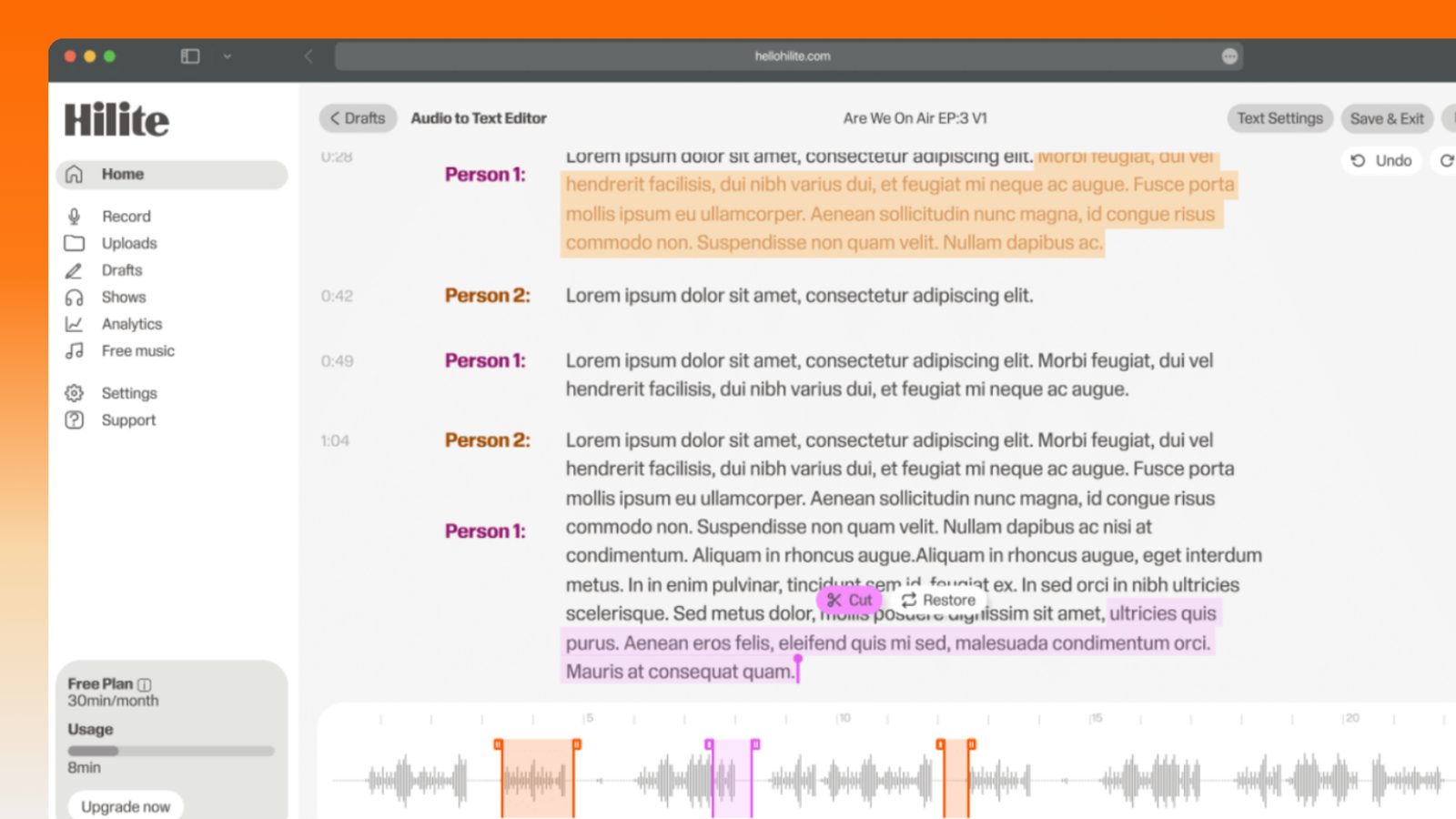
Edit a yoga nidra in four steps
- 1
Lay the sittings out in order
Get every section into one timeline in the right order before you cut anything. Then listen only to the joins — 20 seconds either side of each one — so you can hear which sections don't match before you spend an hour on details.
- 2
Level the whole file, not each clip
Run levelling across the entire recording so every section is measured against the same target rather than against itself. Aim for a fairly quiet, even result — around -18 LUFS with peaks well under the ceiling — and then listen for anything that still stands out.
- 3
Join at a pause, never mid-sentence
Put every cut inside a gap that was already there, ideally after a full stop where you'd naturally breathe. A join in the middle of a phrase exposes any tiny difference in tone; a join inside a two-second silence hides almost all of it.
- 4
Listen right through on earbuds
One pass, quietly, no skipping. Note the timestamps of anything that made you notice the recording, fix only those, then export. The transcript is there too if you want to publish a written version alongside it.
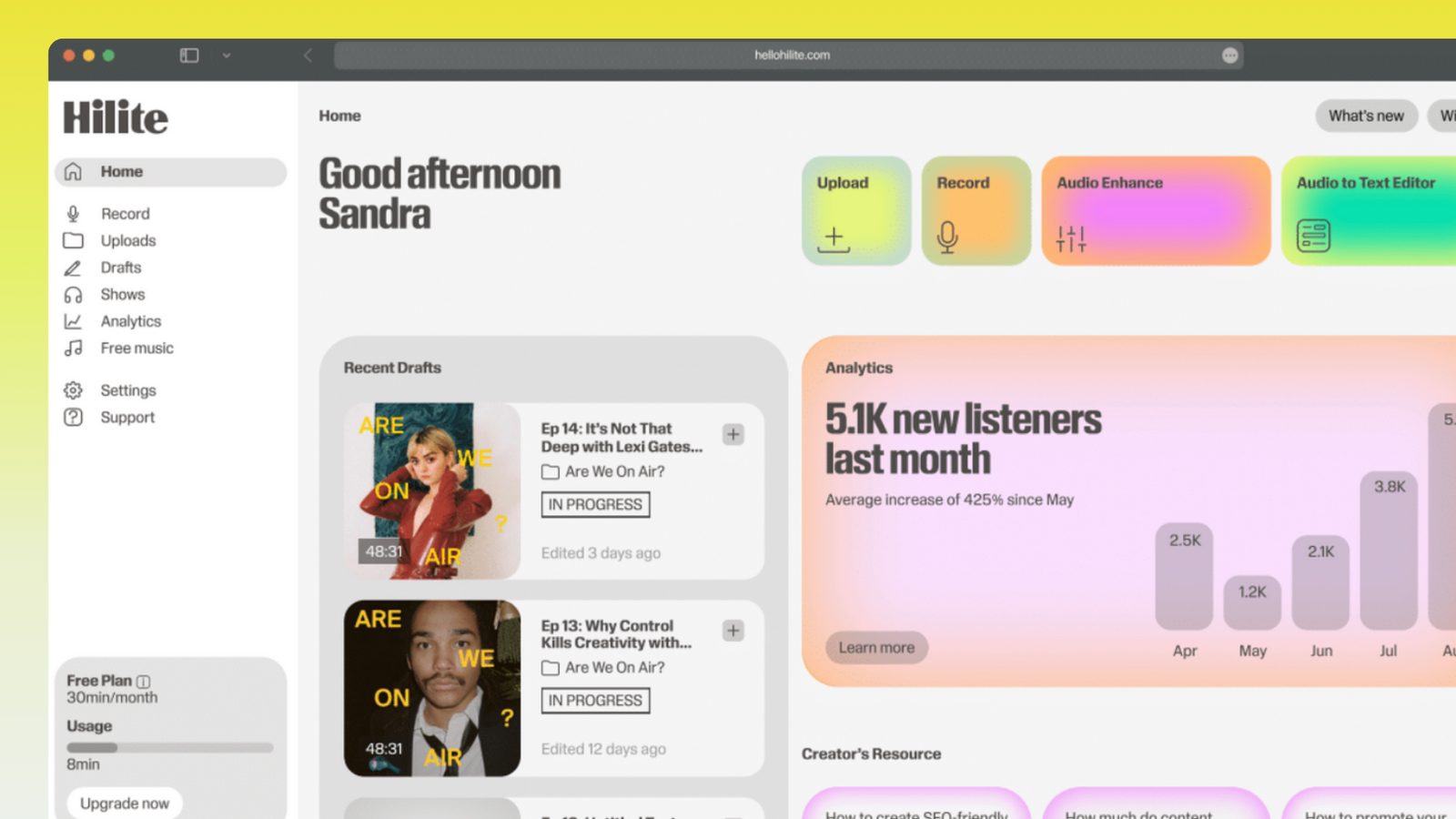
Merge audio inside the Hilite editor
Your uploaded files open directly in a focused editor view. Arrange your clips, preview the timeline, adjust transitions, and export when the track sounds perfectly right.
- Drag to reorder clips
- Trim starts, ends, and gaps
- Preview the full track before export
Input formats
Output formats
Built for every kind of audio
Whatever you are making, this tool helps you get to a cleaner, more useful result, then hand off to Hilite to enhance and polish.
- Consistency beats polishNobody notices a beautifully crafted fade in a nidra. Everybody notices the moment the voice gets closer and louder because that section was recorded on Tuesday. Even it out first and you've done most of the job.
- Minute 30 is the dangerHalf an hour in, the listener is barely conscious and the volume they set at the start is now much too loud for them. Anything that rises above the surrounding level at that point pulls them straight back up.
- Silence is contentThe long gaps are the practice, not dead air to be tidied. Turn off anything that trims silence automatically, and never shorten a pause because the waveform looks empty.
- Check it how it's heardNobody plays a nidra loud on desk speakers. Do your final pass on cheap earbuds at bedtime volume, lying down if you can — problems that were inaudible at your desk are obvious there.
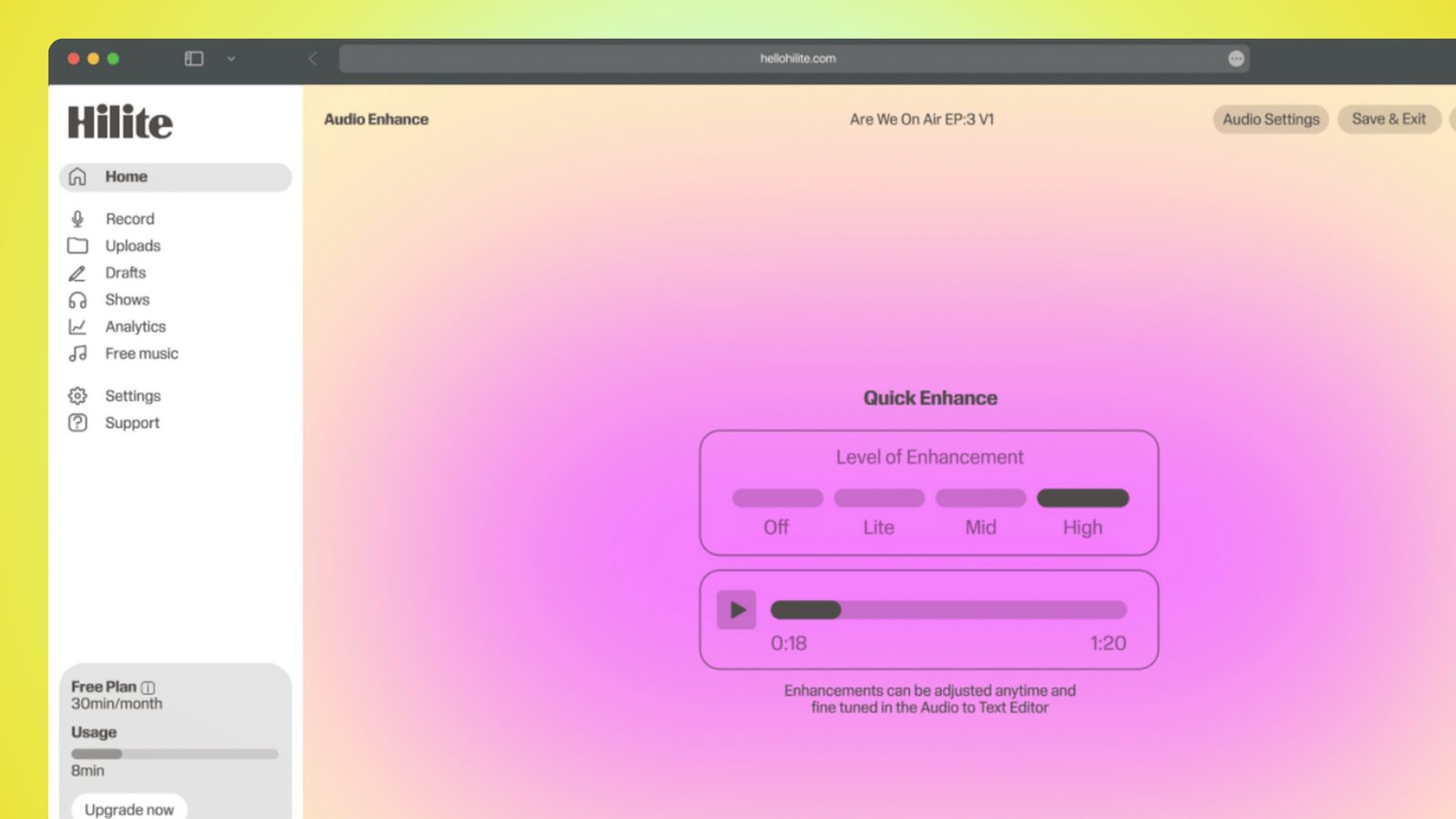
Made for podcasters and their teams
Trim the dead air off the top and tail, and every recording is ready to edit, enhance, and publish.




FAQ
Common questions
If you do not see your question here, the support team replies within one business day.
- Level the whole file in one pass rather than adjusting each section by ear, because ear-matching drifts over 40 minutes — you unconsciously compare each part to the one before it, and small errors accumulate. A single pass measures everything against one target instead. After it runs, scrub through the joins specifically: automatic levelling matches average loudness well, but a section recorded closer to the mic can still sound warmer even at the same volume.
- Inside a silence that was already in the recording, at least a second long, ideally at the end of a sentence. Land the cut where the room tone is steady, not on the tail of a word, and keep a little of the original silence on both sides of the join rather than butting two voices together. If you have to join mid-thought, join after a comma-length breath rather than between two words that belong to each other.
- No. Silence-removal tools are built for podcasts and interviews, where a four-second gap is a mistake. In a nidra those gaps are where the practice happens — they're the time the listener needs to actually find the body part you named. Turn any automatic silence trimming off before you start, and if you shorten anything, shorten it because the practice needs it, not because the waveform looked empty.
- Quieter than a podcast. Podcasts and music are mastered loud so they survive a car or a commute; a nidra is played at bedtime with the volume already low, and pushing it up just means the listener turns it down and now every noise floor and mouth sound is closer to their ears. Somewhere around -18 LUFS with peaks kept well below the ceiling works well. The real test isn't the number, it's whether any single moment in 40 minutes is louder than the rest.
- Partly. A volume difference is easy and levelling handles it. A tone difference — one take brighter or boxier because you sat closer, or the heating was on — is much harder, and heavy EQ to force a match usually makes both sections sound processed. Pull the noise floor down on both so at least the background is consistent, hide the join in a long pause, and if the mismatch is still obvious after that, re-record the shorter of the two sections.
- Audacity is the honest free answer for a desktop and it can do all of this, though matching levels across sections means working through Amplify and Loudness Normalisation manually, which is slow over a 40-minute file. It also needs installing, which rules it out on a locked-down work laptop or a Chromebook. Hilite runs in a browser tab with no install and levels the whole file in one action, which is the specific part that takes longest by hand.
- Listen to the whole thing on cheap earbuds, at the volume you'd actually use in bed, in a quiet room, without skipping. Keep a notepad and write down the timestamp of anything that made you aware you were listening to a recording. Do this once end to end rather than in chunks, because the faults you're hunting are differences between one part and another, and you can only hear those in sequence.
- Only if it can run unbroken under the whole thing. Music that stops during a long silence and restarts afterwards is far more disruptive than no music at all, and a loop with an audible seam becomes maddening after the fourth repeat. If you use a bed, start it before the first word, keep it low and unchanging, and fade it out slowly after the last one.
Even, quiet, and nothing that jolts
Level the whole file, hide the joins in the pauses, and export it ready to publish — all in a browser tab.