Can ChatGPT summarise a podcast?
It cannot listen to one. Paste an episode link and ChatGPT will read whatever text surrounds it, usually the show notes and the description, then write a summary of that. It will sound like a summary of the episode. It is not, and there is no signal in the output telling you which one you got. The fix is simple: transcribe the episode first, then hand it the transcript.
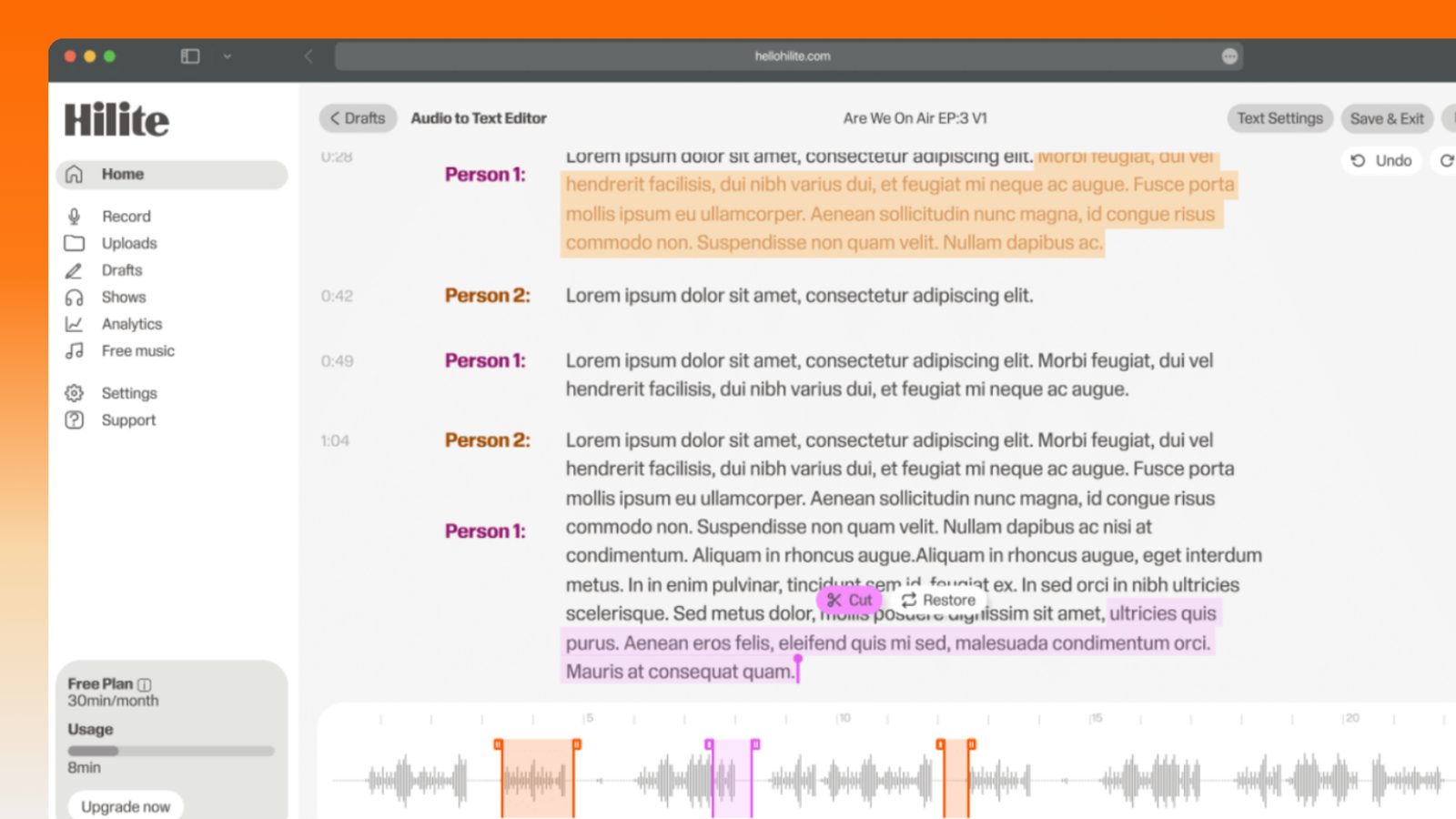
Upload the episode, get a transcript, generate the rest from it.
Transcribe the episode, then make things from it
- 1
Get a transcript of the episode
Some shows publish one. If not, upload the audio to Hilite and get a timestamped transcript back with speaker labels, free.
- 2
Paste the transcript, not the link
Text is what ChatGPT is good at. A transcript of an hour-long episode is well within what it can read and reason over, and it is now summarising the actual episode.
- 3
Ask for what you actually want
Chapter markers, show notes, key quotes with timestamps, a LinkedIn post, an email. These are different documents and asking for the specific one beats asking for a summary.
- 4
Check the quotes against the audio
Anything you publish as a direct quote should be verified. With a timestamped transcript this takes one click per quote rather than a hunt through the episode.
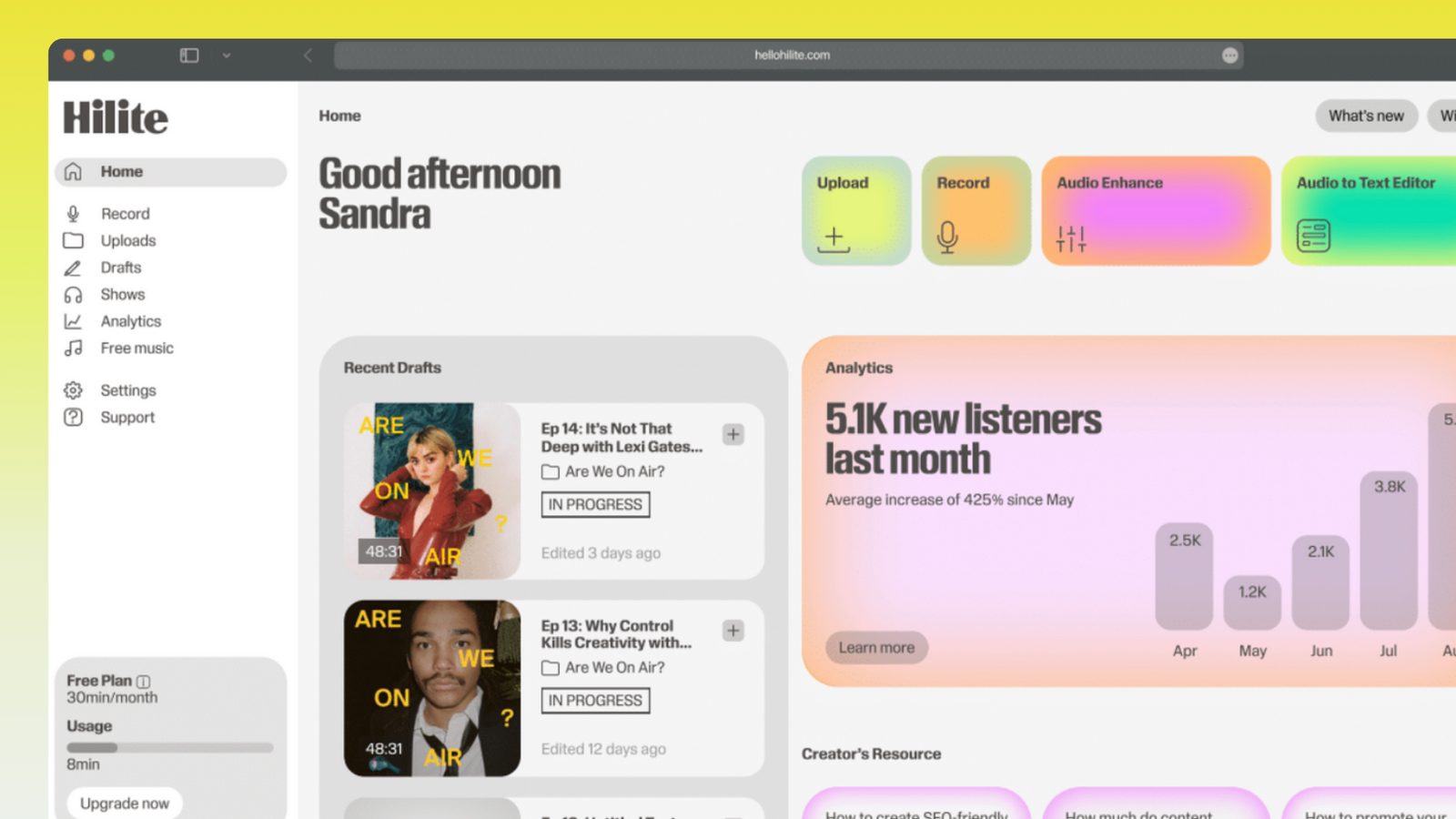
Keep working inside the Hilite editor
Your uploaded files open directly in a focused editor view. Arrange your clips, preview the timeline, adjust transitions, and export when the track sounds perfectly right.
- Review the transcript in context
- Keep timestamps with the words
- Copy, export, or keep editing
Input formats
Output formats
Built for every kind of audio
Whatever you are making, this tool helps you get to a cleaner, more useful result, then hand off to Hilite to enhance and polish.
- The failure is silentA summary of show notes and a summary of the episode look identical. Nothing in the output warns you, which makes this the most quietly wrong thing you can do with a podcast and a chatbot.
- Show notes are marketingThey describe what the episode promised, not what was said. The most interesting twenty seconds of an interview are almost never in the description.
- A transcript is reusableOnce the episode is text, the summary is one of many things you can make from it: chapters, clips, social posts, a newsletter, a search index of your back catalogue.
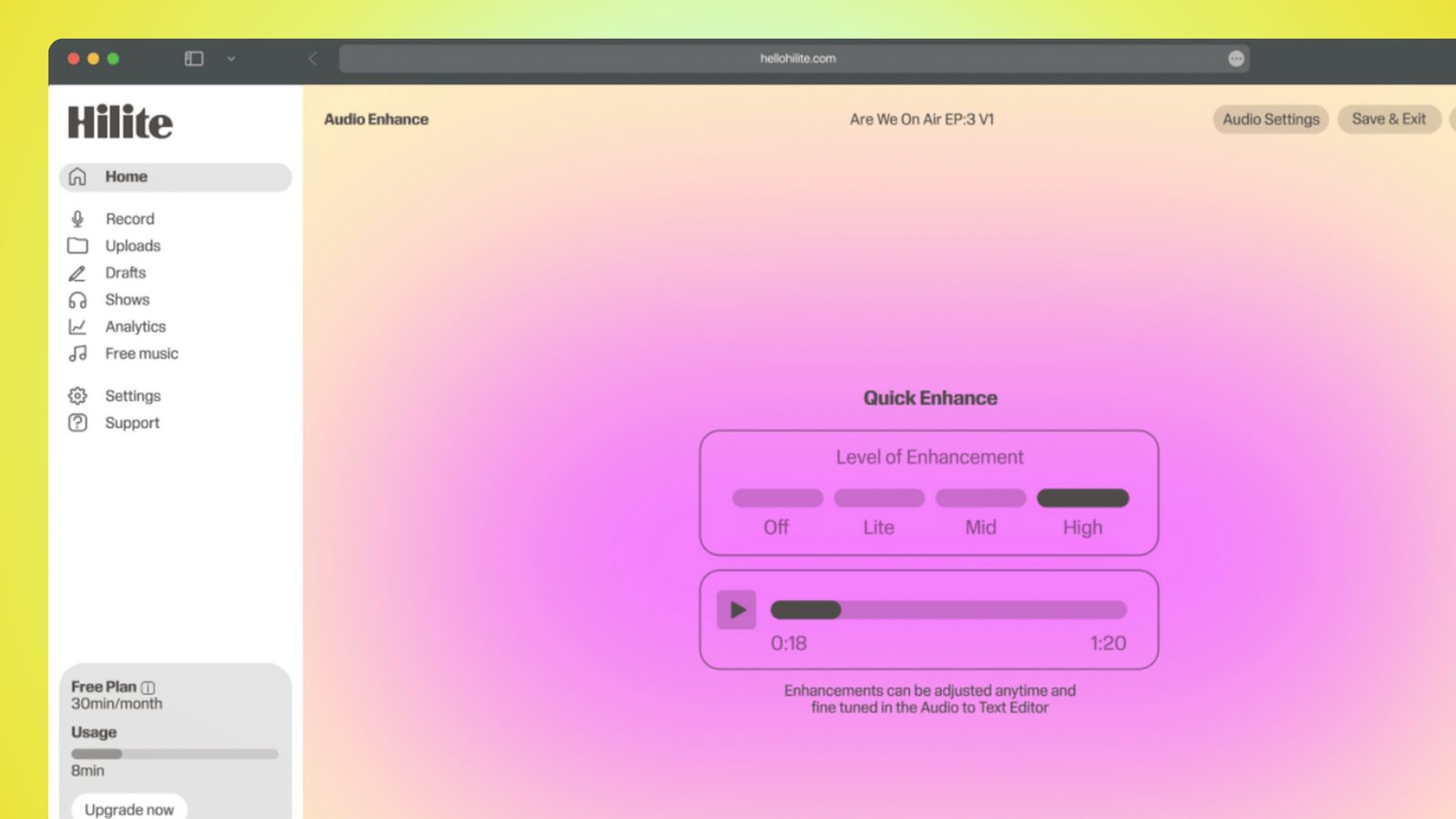
Made for podcasters and their teams
Trim the dead air off the top and tail, and every recording is ready to edit, enhance, and publish.



FAQ
Common questions
If you do not see your question here, the support team replies within one business day.
- No. It cannot play audio from a link. It reads the page, which usually means the title, description and show notes, and summarises those. The result reads like an episode summary and is not one.
- On a paid plan, for short episodes. A full hour at ordinary quality exceeds the 25MB single-request limit, so most episodes have to be split first, which is more work than transcribing properly.
- Check whether the show publishes one first, since many do. Otherwise you can transcribe the audio yourself for personal use. Republishing someone else's transcript is a different matter and usually needs their permission.
- Yes. Hilite transcribes the episode in the browser, free to start, with timestamps and speaker labels, and can generate show notes and content from the transcript in the same place.
- From a transcript, yes, within the usual limits of summarisation: it will compress, and it may flatten nuance or a joke. From show notes it is not a summary of the episode at all, which is a different and much larger problem.
Summarise the episode, not the show notes
Transcribe the audio first, free in the browser, then generate show notes, chapters and clips from the actual words.