Free voice memo to text converter
A voice memo is the fastest way to catch an idea and the slowest way to find it again. Upload the file and Hilite returns a transcript with timestamps, in 99+ languages, that you can search, correct and export. Works with the M4A files iPhone Voice Memos produces and with Android recordings, including the long ones your phone will not transcribe on its own.
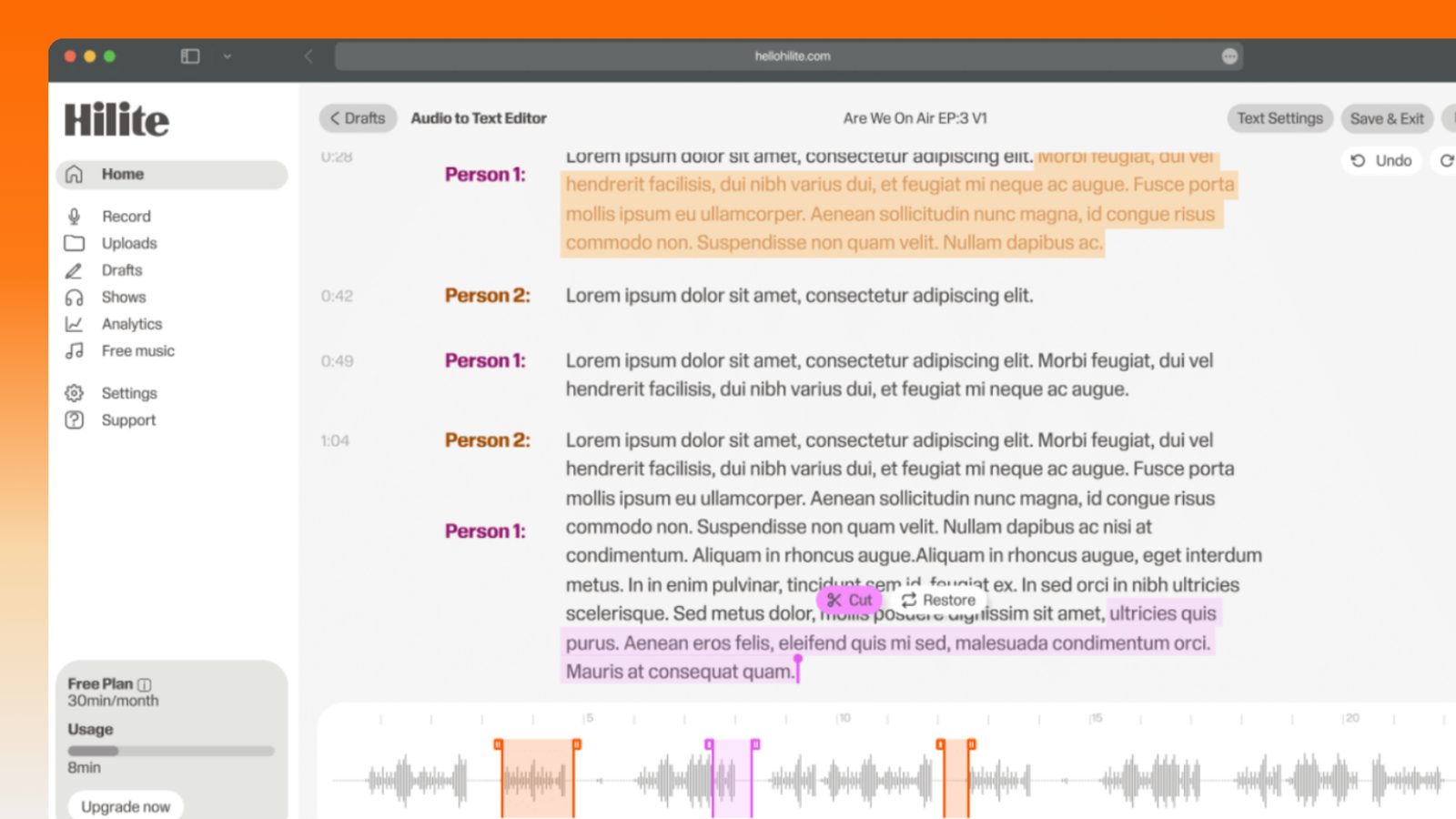
Upload the memo, search the transcript, export it.
How to turn a voice memo into text
- 1
Get the file off your phone
In iPhone Voice Memos, share the recording to Files, email or a cloud folder. Android recorders export the same way. The file will usually be an M4A.
- 2
Upload it
Drag it in. There is no length limit to work around, so a ninety-minute memo goes in as one file.
- 3
Search it
This is the point. A folder of untitled voice memos is unsearchable. As text it becomes something you can scan in a minute and find a specific idea inside.
- 4
Export or build on it
Download the transcript, or stay in Hilite to trim the recording by editing the text, or turn the memo into something publishable.
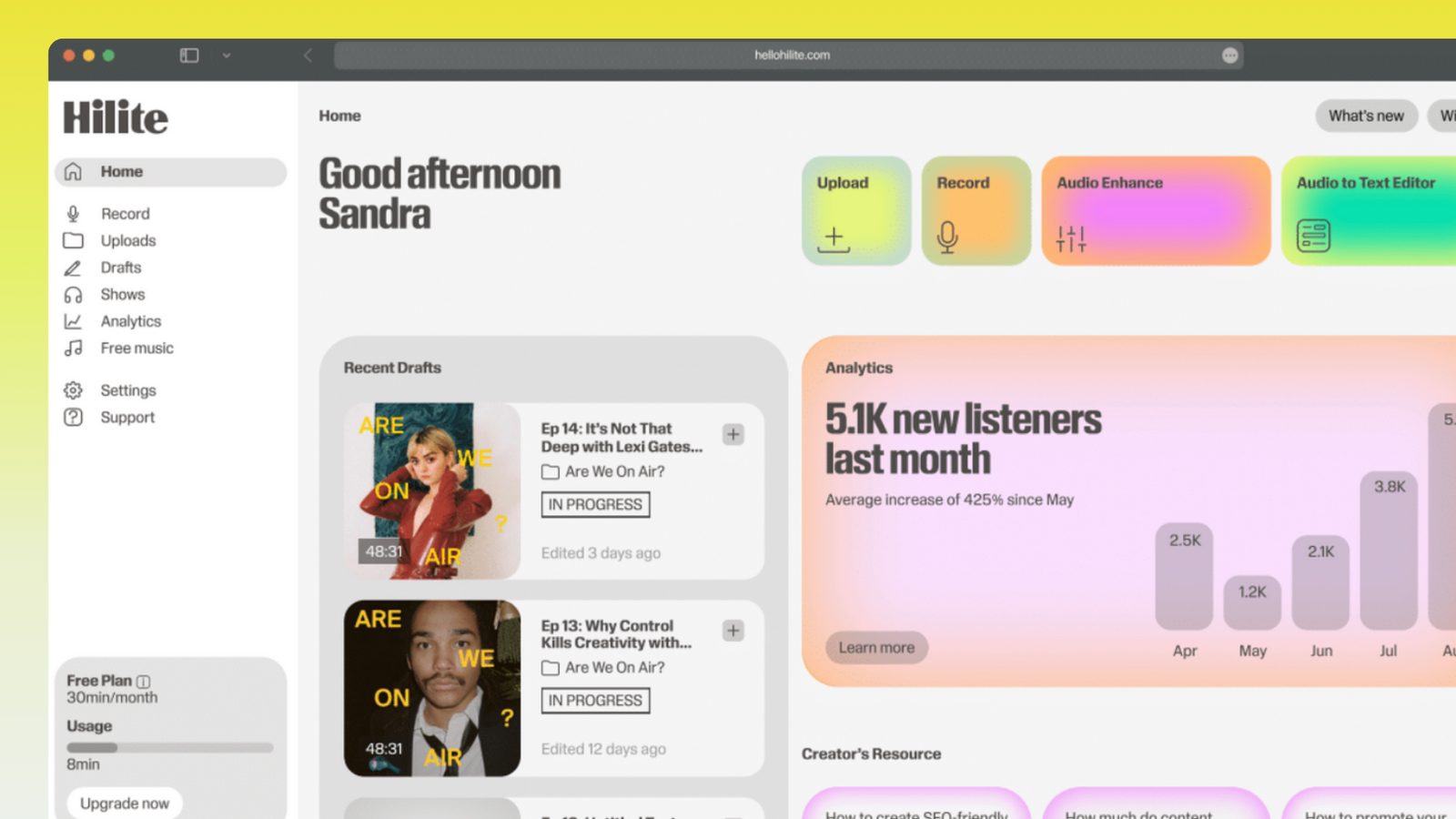
Keep working inside the Hilite editor
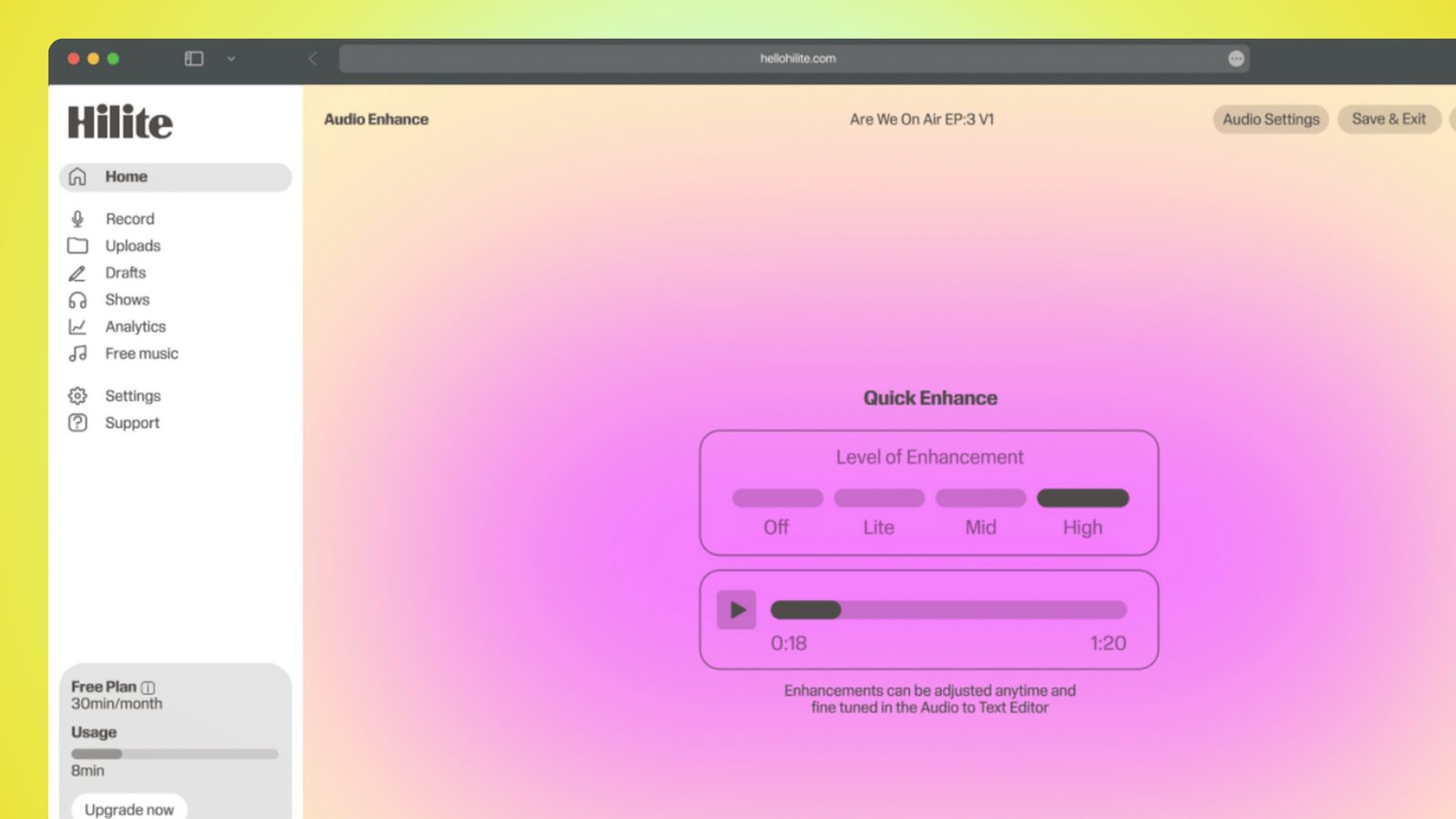
Your uploaded files open directly in a focused editor view. Arrange your clips, preview the timeline, adjust transitions, and export when the track sounds perfectly right.
- Review the transcript in context
- Keep timestamps with the words
- Copy, export, or keep editing
Input formats
Output formats
Built for every kind of audio
Whatever you are making, this tool helps you get to a cleaner, more useful result, then hand off to Hilite to enhance and polish.
- Voice memos pile up unreadMost people have dozens. Almost nobody goes back to listen. Text is what turns that folder from an archive into something you can actually use.
- Phones give up on long onesOn-device transcription is built for short clips. A long interview, lecture or car-journey ramble is exactly where it stops, and exactly where you most need the text.
- Timestamps beat scrubbingYou rarely want the whole memo. You want the forty seconds where you said the useful thing, and a timestamped transcript is how you get straight to it.
Made for podcasters and their teams
Trim the dead air off the top and tail, and every recording is ready to edit, enhance, and publish.



FAQ
Common questions
If you do not see your question here, the support team replies within one business day.
- M4A, which uploads directly with no conversion. Android recordings are usually M4A, MP3 or WAV, and all three work the same way.
- On-device transcription is good for short clips and is limited on long ones. It also gives you text inside the Voice Memos app rather than a file you can edit, search across, correct against the audio or export as a document or subtitles.
- Yes. A ninety-minute memo goes in as a single file. Timestamps run continuously, so you can jump to any point.
- Usually, and not always. Names, places and made-up words are the hardest part of any transcript. Every line stays linked to the audio, so correcting one takes a click rather than a search.
- Free to start. Longer recordings, saved projects and some export formats may need a free Hilite account.
Make your voice memos searchable
Upload a memo and get a timestamped transcript you can search, correct and export. Free to start.