Record a yoga nidra
Record a yoga nidra in sittings rather than one heroic take. Voice Memos or Windows Voice Recorder will capture it, and a phone on a stand a hand's width away genuinely sounds fine for this, so don't rush out and buy anything. The problem isn't the mic, it's the length. A nidra runs 20 to 45 minutes, and your voice at minute 38 is not the voice you had at minute 3 — it tires, it dries, it drops in pitch and it stops keeping time. Warm up first, keep water next to you, record in three or four sittings you deliberately match, and join them in an editor afterwards.
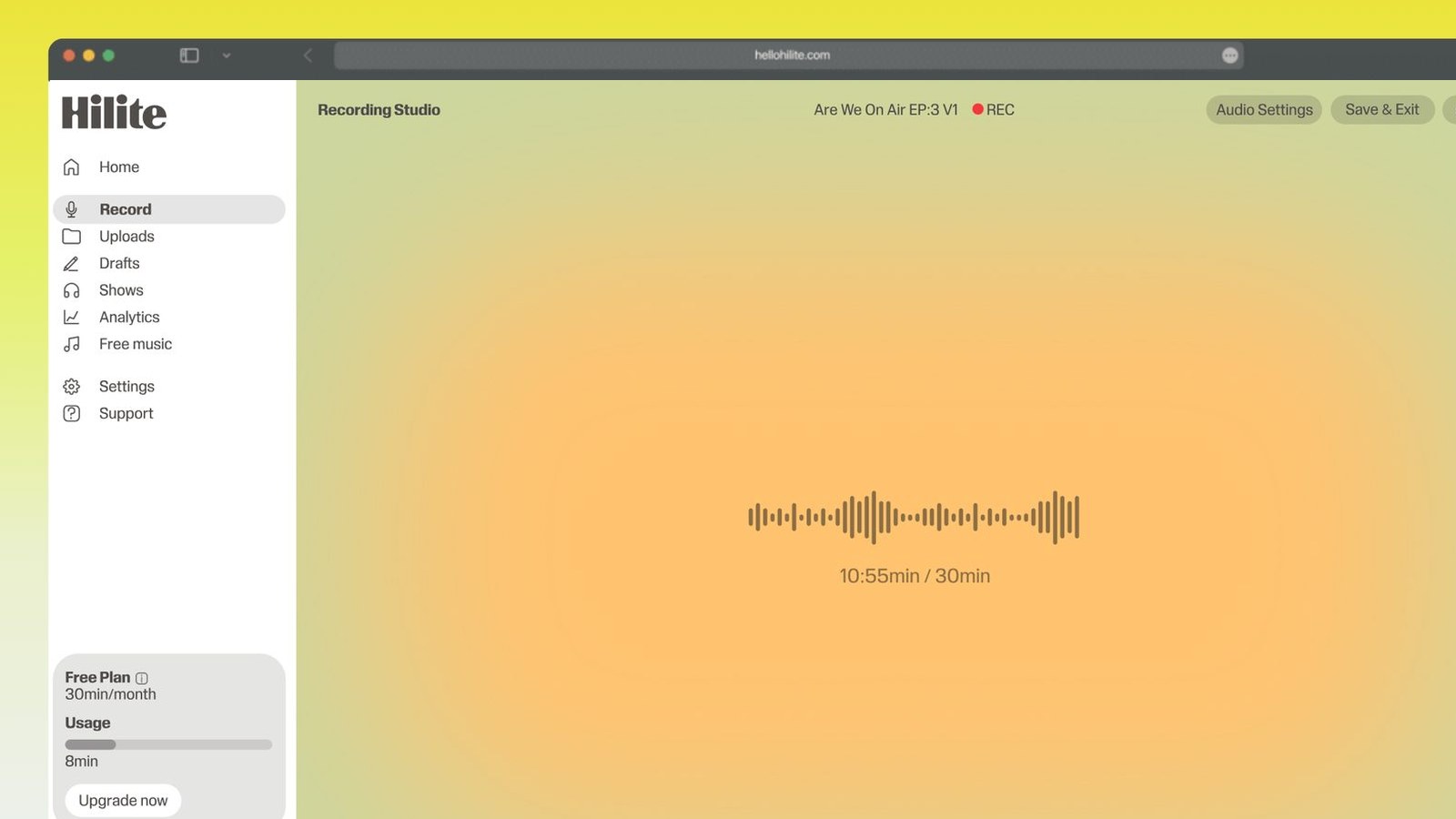
Record a yoga nidra in four steps
- 1
Warm the voice up first
Five minutes of humming and reading something aloud before you press record, plus room-temperature water within reach. A cold voice at the start of a 40-minute file sounds noticeably different from the same voice half an hour in, and you can't fix that later.
- 2
Set the mic once and mark it
A hand's width away and angled slightly past your mouth. Put a bit of tape on the desk where the stand sits, note the gain, and take a photo of the setup — you'll need to rebuild it exactly for the next sitting, possibly tomorrow.
- 3
Record the rotation at one steady pace
Count silently and keep the gaps between body parts identical, right hand thumb to right hand little finger and on round the body. Resist the pull to accelerate once you know the sequence; even is more important than slow.
- 4
Punch in, then join the sittings
If you fumble a line, pause, restart from the beginning of that sentence and keep going — you'll cut to it later. Each sitting lands in the same editor, so you can level the whole thing as one file at the end.
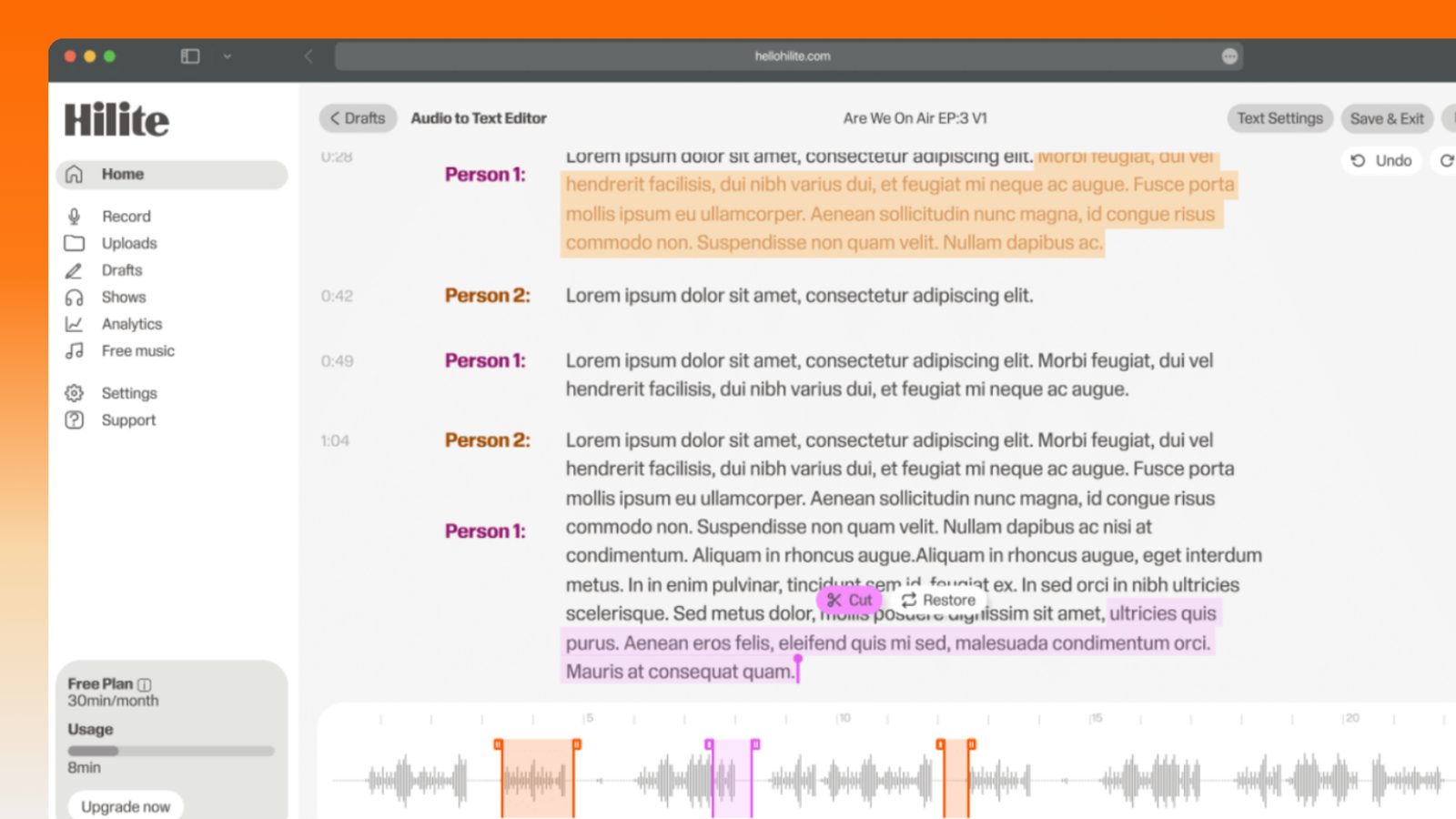
Keep working inside the Hilite editor
Your uploaded files open directly in a focused editor view. Arrange your clips, preview the timeline, adjust transitions, and export when the track sounds perfectly right.
- Record straight into the browser
- Watch levels as you speak
- Keep the take, or run it again
Input formats
Output formats
Built for every kind of audio
Whatever you are making, this tool helps you get to a cleaner, more useful result, then hand off to Hilite to enhance and polish.
- Long form driftsOver 40 minutes your voice quietly changes without you noticing — lower, drier, a little slower. Short recordings hide this; a nidra puts it on display, so plan around it instead of pretending it won't happen.
- The rotation needs a metronomeAn uneven pace through the body parts is the commonest reason a nidra recording fails. If you speed up in the second hand and slow down at the feet, the listener's attention snags on the change instead of following it.
- Punching in invisiblyYou will fluff a line at minute 26 and you should not re-record the whole thing. Stop, breathe, match the tone and pace you had a sentence ago, and record just that passage again.
- Distance decides the joinMove 10cm closer between sittings and the second section sounds warmer and closer than the first, which no amount of levelling fully fixes. Mark where the mic sits and where you sit.
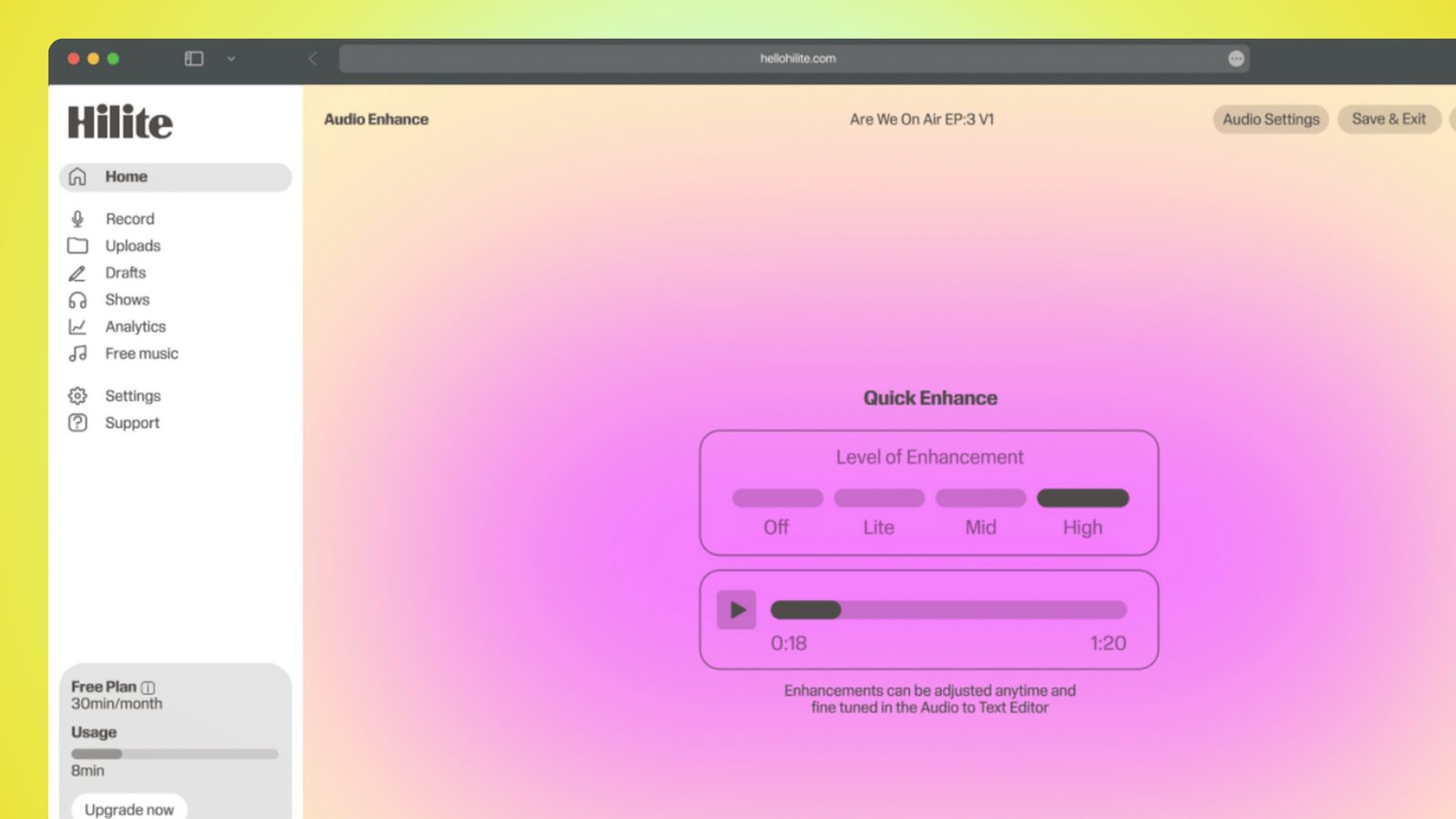
Made for podcasters and their teams
Trim the dead air off the top and tail, and every recording is ready to edit, enhance, and publish.

FAQ
Common questions
If you do not see your question here, the support team replies within one business day.
- Most published nidras run 20, 30 or 45 minutes, and it's worth picking one of those and building the script to fit rather than letting it land wherever. Remember that you'll be speaking far slower than normal — around 90 to 100 words a minute against 150 in ordinary speech — so a 30-minute nidra is roughly 2,800 words, not 4,500. If you're unsure, 20 minutes is the version people actually finish and repeat.
- No, and the pressure to do it is what ruins most attempts. Break it at the natural seams — settling, sankalpa, rotation of consciousness, breath, opposites, visualisation, return — and record two or three of those per sitting. Match the mic position and the time of day across sittings, and the joins are invisible. One 45-minute take means one mistake at minute 41 costs you the whole evening.
- Punch in. Stop where you are, take one breath, go back to the start of the sentence you fluffed and say it again the same way, then carry on. The critical part is matching what you were doing a sentence earlier — same pace, same volume, same distance from the mic — because a punch-in that's noticeably brighter or faster than its surroundings is more distracting than the stumble was. Do it in the same sitting, not tomorrow.
- Slower than feels natural, and — more importantly — identically all the way through. A useful rhythm is one body part every two seconds or so, with the gap between parts the same length every time. Count it silently if you need to. The listener's attention is walking round the body on your voice, and any change in tempo pulls them back into thinking about the recording instead of following it.
- Less than you think. A recent phone held a hand's width away in a soft room beats a cheap USB mic in a bare one, because the room matters more than the capsule for a calm spoken voice. If you're buying, a basic USB condenser is plenty. Spend the effort on soft furnishings, a quiet time of day and turning the fridge or fan off instead — those changes are audible and free.
- Warm up before you start, drink room-temperature water rather than cold, and don't clear your throat — it irritates the folds and makes the problem worse. Then accept that stamina has a limit and record in 10 to 15 minute sittings with a real break between them. Most people also have a time of day when their voice sits at its best; find yours and record nidras then, consistently, so the sittings match.
- Yes. Voice Memos on iPhone and the built-in recorder on Android will both capture 45 minutes without complaint, and the audio quality is fine for this. Where they run out is everything afterwards: they trim the ends only, so you can't cut to a punch-in, you can't even out one sitting against another, and you can't pull the room hiss down under long silences where it's most obvious. That's the point at which the file needs an editor.
- Optional, and plenty of respected teachers use nothing at all. If you do add music, keep it constant and well under the voice, start it before you begin speaking and end it after you finish, so there's no moment where something appears or vanishes. Gongs and bells are the risky ones — anything with a sharp attack can jolt someone who is already half asleep, which is the opposite of what the recording is for.
Record it in pieces, leave with one file
Every sitting lands in the same browser editor, so the joins, the levels and the silences are all handled in one place.